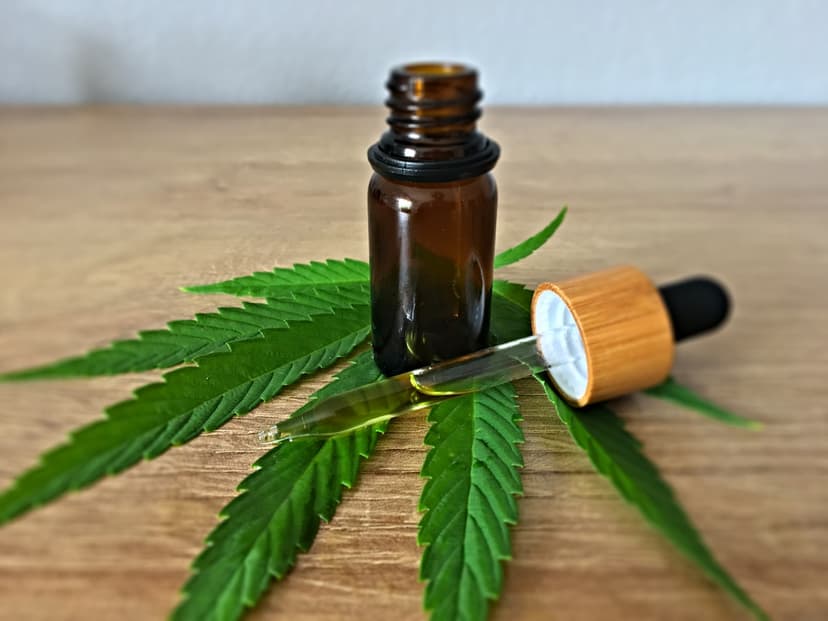
The latest trends in the CBD B2B sector
In the world of business it is essential to keep evolving in order to remain competitive. One emerging sector that holds promise is the CBD B…
In the world of business it is essential to keep evolving in order to remain competitive. One emerging sector that holds promise is the CBD B2B business. This is about the wholesale and distribution side of CBD products originating from the cannabis industry.
The CBD industry is recording enormous growth, and there are many trends companies should pay attention to in order to succeed. CBD wholesale, the developments in the cannabis industry, the market development of CBD products in the B2B segment as well as the different business models and distribution strategies in the CBD sector are some of the important trends companies should know in order to be successful this year.
Key insights:
- The cannabis industry has a considerable influence on the CBD B2B business and is experiencing an enormous upswing.
- More and more companies are entering CBD wholesale, which is due to the growth and the rising demand for CBD products.
- There is a wide range of innovative business models in the CBD B2B sector that companies can draw on in order to be successful.
- CBD partner programmes are an effective distribution strategy in the B2B sector and can help companies extend their reach.
- B2B CBD distribution requires specific strategies in order to succeed, and companies should focus on relevant trends such as hemp-based B2B solutions.
The boom in CBD wholesale
As CBD products grow in popularity, demand in CBD wholesale is rising as well. More and more companies are recognising the potential of this market and entering B2B cannabis distribution.
The CBD market development in the B2B sector is promising. According to a study by Brightfield Group, the B2B CBD market in the USA is expected to grow to 12.4 billion US dollars by 2023. Similar growth is emerging in Europe and other parts of the world as well.
Reasons for the boom in CBD wholesale
There are various reasons why CBD wholesale is booming at the moment. One important factor is the rising demand for CBD products. More and more end customers are asking for CBD products in the wellness, cosmetics and food supplement segments.
The legalisation of cannabis in many countries has also contributed to the growth of CBD wholesale. Companies now have the opportunity to enter B2B cannabis distribution legally and to benefit from the advantages of the cannabis industry.
Market development of CBD products in the B2B segment
The market development of CBD products in the B2B segment is extremely promising. There is a large number of CBD products suitable for wholesale, from CBD oils and capsules through to CBD flowers and extracts.
| Product | Description | Demand segment |
|---|---|---|
| CBD oil | Extraction from hemp plants, contains CBD and other cannabinoids | Wellness, cosmetics, food supplements |
| CBD capsules | Contain CBD oil in capsule form | Simple dosing, discreet intake |
| CBD flowers | Dried hemp flowers with a high CBD content | Vaporisation, relaxation |
| CBD extracts | Concentrated CBD oils that can be used for the manufacture of other CBD products | Use in the cosmetics and food industry, supplement production |
The broad range of applications of CBD products makes them attractive for companies in many industries. CBD is used, for example, in the cosmetics industry, in food production, in the health and wellness sector as well as in animal health.
CBD wholesale offers companies the opportunity to benefit from this growth market and to develop innovative hemp-based B2B solutions.
The growing importance of the cannabis industry
The cannabis industry is experiencing a renaissance and is showing enormous growth, especially in the field of CBD products. B2B cannabis distribution has established itself as an important sector within the industry. More and more companies are investing in the manufacture and distribution of CBD products. The market development of CBD products in the B2B segment shows that sales have grown steadily in recent years.
The growing importance of the cannabis industry also has an influence on the CBD market in the B2B sector. More and more companies are relying on CBD products and have recognised that they hold enormous potential. CBD products are already used in various industries, such as cosmetics, the food industry and medicine. The CBD market development in the B2B sector shows that more and more companies are relying on the advantages of CBD products and integrating them into their own products.
The effects on B2B cannabis distribution
The growing importance of the cannabis industry also has effects on B2B cannabis distribution. More and more companies are relying on the sale of CBD products, which leads to increasing competition in the B2B sector. In order to be successful in this market, companies rely on hemp-based B2B solutions and innovative business models to set themselves apart from the competition.
B2B cannabis distribution also offers opportunities for companies operating in other industries. By integrating CBD products into their own products, companies can extend their range and win new customers. The market development of CBD products in the B2B sector shows that demand for CBD products is rising and that companies betting on this market hold great potential.
Innovative business models in the CBD B2B sector
The CBD B2B business offers companies from a wide variety of industries a wealth of business models for achieving success. Hemp-based B2B solutions are an important trend here, one that has become increasingly established in recent years.
The role of hemp-based B2B solutions
Hemp-based B2B solutions are becoming ever more popular, since they are not only sustainable but are also regarded as a mark of quality for companies. Most companies specialising in hemp-based B2B solutions work with organically grown hemp and use it in their products. Hemp-based B2B solutions include products such as hemp seeds, hemp oil, hemp flour and much more.
B2B CBD growth
The growth of the B2B CBD sector is impressive. More and more companies are relying on CBD products and demand is rising continuously. According to a report by BDS Analytics and Arcview Market Research, B2B CBD revenue in the USA is estimated at over 20 billion dollars by 2024.
CBD B2B business models
There are many different business models in the CBD B2B sector. Some companies specialise in the distribution of CBD products, while others concentrate on the manufacture of hemp-based products. Other companies offer CBD partner programmes or sell CBD products via online marketplaces or retailers. An increasingly popular option is also the white labelling of CBD products.
| Business model | Description | Advantages |
|---|---|---|
| Distribution of CBD products | The company sells CBD products to retailers or directly to the end consumer. | High profit margin, flexible pricing, direct customer contact |
| Manufacture of hemp-based products | The company concentrates on the production of hemp products such as hemp seeds, hemp oil or hemp flour. | Sustainability, mark of quality, high profit margin |
| CBD partner programmes | The company offers partners a way to promote CBD products and receives a commission in return. | Increased reach, low costs, scalability |
| White labelling of CBD products | The company manufactures CBD products that are sold under another company's brand. | High demand, low risk, fast market launch |
Regardless of the chosen business model, companies should make sure that their products are of high quality and have a clear USP. Hemp-based B2B solutions can play an important role here and help companies set themselves apart from the competition.
Successful CBD partner programmes
In the B2B sector, CBD partner programmes are an increasingly popular distribution strategy. Through such programmes companies can increase their visibility and sales figures and benefit from a win-win situation with their partners.
CBD partner programmes offer a large number of advantages, including:
- Increasing reach: by working together with partners, a company's network and presence can be extended quickly.
- Increasing credibility: recommendations and reviews from partners help to win the trust of potential customers.
- Increasing revenue: through partnerships companies can raise their sales figures and increase their income.
In order to build a successful CBD partner programme, companies should have a clear strategy and clear goals. It is important to find carefully selected partners who appeal to the company's target group and share its values. Companies should also make sure that their partners are appropriately rewarded for their work in order to keep their motivation high.
Some successful CBD partner programmes specialising in the sale of CBD products are:
- cbdkaufen.com: a partner programme that offers a wide range of CBD products and grants its partners a generous commission.
- cannabis-oel.de: a partner programme that concentrates on the sale of hemp oil and other CBD products and offers its partners competitive commissions.
- cbd-paradise.de: a partner programme that offers a large number of CBD products and provides its partners with high commissions as well as a large number of tools and resources.
It is important to note that successful CBD partner programmes require continuous adjustment and improvement in order to meet the requirements of the market. Companies should therefore work closely with their partners in order to ensure cooperation that is successful in the long term.
Success factors for B2B CBD distribution
CBD B2B distribution requires specialised strategies in order to be successful. The following lists some success factors that companies in the B2B CBD field should take into account:
- CBD distribution strategies – Companies must develop and implement a suitable distribution strategy in order to market their CBD products effectively. A strategy geared towards B2B distribution should take into account the specific needs and requirements of companies in order to build long-term business relationships.
- B2B CBD growth – Companies should make use of the enormous growth potential of the B2B CBD market and align their distribution strategies accordingly. It is important that companies continuously adapt their offerings to the changing needs of customers.
- Quality and safety – High-quality and safe CBD products are a key factor for the success of companies in the B2B CBD sector. Companies should make sure that their products comply with the applicable regulations and are manufactured in a safe environment.
- Legal framework – The legal framework for CBD products can change quickly. Companies should stay up to date with the statutory requirements and make sure that their products comply with the applicable regulations.
- Customized Solutions – In order to remain competitive, companies in the CBD B2B sector should adapt their offerings to the specific needs and requirements of their customers. Individually tailored solutions can help to build long-term business relationships and increase customer satisfaction.
Quality and safety as success factors
High-quality and safe CBD products are of decisive importance for the success of companies in the B2B CBD sector. Companies should make sure that they source products only from reliable suppliers that are manufactured in a safe environment.
Compliance with the applicable regulations and legal framework is another important aspect companies should take into account. Regular checks and tests can help ensure that products meet the highest quality standards and are safe for consumers.
Customized Solutions for long-term business relationships
Adapting offerings to the specific needs and requirements of customers can help build long-term business relationships. Companies should get to know their customers better in order to understand their needs better and be able to offer individually tailored solutions.
Individually tailored solutions can help increase customer satisfaction and promote the growth of the company. Companies should listen to the needs of their customers and be flexible enough to adapt their offerings accordingly.
Challenges in the CBD B2B business
Although the CBD B2B business has grown rapidly in recent years, there are also challenges companies face. These challenges can affect the market development and the distribution of CBD products in the B2B segment.
Country-specific laws
Country-specific laws and rules are one of the biggest challenges in the CBD B2B sector. Every country has different regulations for the sale and the use of CBD products. Companies must therefore comply with the specific rules of the respective country in which they operate.
Quality control
Another problem in the CBD B2B business is the control of product quality. Since the quality of CBD products depends on many factors and is not always easy to measure, companies must make sure that their products meet the highest quality standards. Compliance with quality control is an important factor for the distribution and the success of CBD products in the B2B sector.
Pricing
Pricing is another important topic in the CBD B2B sector. The price of CBD products can vary depending on quality, type of product and country-specific laws. Companies must therefore make sure that their pricing is competitive and corresponds to market conditions.
Competition
Competition in the CBD B2B sector is another obstacle for companies. More and more companies are recognising the potential of CBD products and entering the market. In order to remain competitive, companies must invest in innovative business models and continuously improve their distribution strategies.
Market development
Market development in the CBD B2B sector is another important factor for companies. Demand for CBD products can vary depending on country and region, which creates opportunities and risks for companies. Companies must therefore keep themselves continuously informed about market development in order to adapt their business strategies accordingly.
Conclusion
The challenges in the CBD B2B business are varied. Companies must focus on country-specific laws, quality control, pricing, competition and market development in order to be successful. Through strategically oriented business planning, companies can master these challenges and exploit the potential of the CBD B2B business.
Future prospects for the CBD B2B business
The CBD B2B business has recorded enormous growth in recent years and the future prospects are very promising. Experts forecast that the global CBD market will grow to 23.6 billion US dollars by 2028. This growth will also influence the B2B CBD sector and drive B2B CBD growth further.
An important trend in the CBD B2B sector is the shift from physical distribution channels towards digital platforms. More and more B2B companies are relying on online distribution strategies in order to offer and sell their products. This trend is expected to intensify further, and companies that ignore this development could lose market share to innovative industry members or competitors.
Effects of legalisation and regulation on the CBD market
The legalisation of cannabis in various parts of the world and the accompanying decriminalisation of CBD products will further promote the growth of the CBD B2B sector. The legalisation of cannabis in the EU, for example, could further stimulate B2B CBD distribution and CBD market development in Europe.
However, the regulation of CBD products in the B2B sector will also continue to increase. The FDA, for example, has already issued warnings to or imposed financial penalties on some companies for unauthorised, misleading or fraudulent advertising, sale or distribution of CBD products. Companies operating in the B2B CBD field should comply with the applicable regulations and label and advertise their products carefully.
Opportunities for hemp products in the B2B sector
Another promising future prospect for the CBD B2B business is the use of hemp products in other industries. Hemp can be used, for example, in the manufacture of textiles, cosmetics, food and even in the construction trade. The integration of hemp products into other industries could extend the B2B CBD sector and offer new opportunities.
Conclusion
The CBD B2B business will remain an important trend in the cannabis industry in the future as well. The growth of the global CBD market will drive the B2B CBD sector further and will require innovative business models as well as digital distribution strategies. Companies that comply with the evolving regulations and target the use of hemp products in other industries will most probably be successful.
Successful brands in the CBD B2B sector
In the fiercely contested CBD B2B market, some brands have proven particularly successful by using innovative distribution strategies and relying on hemp-based B2B solutions.
One of these brands is, for example, “CBD Naturals”. The company offers a wide range of CBD products tailored specifically to the needs of companies. It also offers bespoke solutions in order to maximise the distribution of CBD products and promote growth.
Another example is “HempFlax”. The company has specialised in the production and marketing of hemp products and offers a large number of hemp-based B2B solutions. HempFlax also has a strong presence in the European market and is an important player in the industry.
The importance of CBD distribution strategies
A successful distribution strategy is a decisive factor for the success of companies in the CBD B2B sector. An effective strategy should aim to increase awareness of the brand, win potential customers and retain existing customers.
An important aspect of a good distribution strategy is to understand the needs and wishes of customers and to respond to them. That also means familiarising oneself with the current trends and developments in the CBD market and adapting on an ongoing basis.
Hemp-based B2B solutions
More and more companies are turning to hemp-based B2B solutions in order to optimise their business. Hemp-based products not only offer a wide range of possible applications, they are also environmentally friendly and sustainable. Some companies use hemp fibres as packaging materials, for example, or offer hemp-based B2B solutions in the textiles field.
The use of hemp as a raw material for B2B solutions is also an important step towards a more sustainable future. By using environmentally friendly materials, companies can improve their sustainability strategy and at the same time meet the expectations of their customers.
Conclusion
Having looked at the latest trends in the CBD B2B business, it can be established that the market is very promising overall. CBD market development in the B2B segment is strong and there is steady B2B CBD growth.
Companies should rely on innovative CBD distribution strategies in order to be successful and establish their brand. CBD partner programmes offer an effective way to drive one's own business forward here.
However, there are also challenges in the CBD B2B business, such as an unclear legal situation. Companies should therefore inform themselves well in order to minimise legal risks.
All in all, the CBD B2B sector offers numerous opportunities and there is a large number of successful brands. Hemp-based B2B solutions play an important role here. The future prospects are promising and it remains to be seen which new trends and developments will appear in the industry.
FAQ
What are the latest trends in the CBD B2B sector?
We take a look at the latest trends in the CBD B2B business, including CBD wholesale, market development of CBD products in the B2B segment and innovative CBD B2B business models.
Why is CBD wholesale booming?
More and more companies are recognising the potential of CBD products and entering CBD wholesale. We examine the reasons for this boom and the market development of CBD products in the B2B segment.
How important is the cannabis industry in the B2B sector?
The cannabis industry is experiencing an enormous upswing, especially in the CBD field. We shed light on the growing importance of the cannabis industry and its effects on the CBD market in the B2B sector.
Which innovative business models exist in the CBD B2B sector?
In the CBD B2B sector there is a large number of innovative business models companies use in order to be successful. We present some of these business models and examine the growth of CBD in the B2B segment as well as the role of hemp-based B2B solutions.
Which CBD partner programmes are successful?
CBD partner programmes are an effective distribution strategy in the B2B sector. We take a close look at successful CBD partner programmes and analyse their contribution to the success of companies in the CBD B2B business.
Which success factors are important for B2B CBD distribution?
B2B CBD distribution requires specific strategies in order to be successful. We examine the success factors for B2B CBD distribution and give valuable tips for companies operating in the CBD B2B sector.
Which challenges exist in the CBD B2B business?
Despite the growth and success in the CBD B2B business, there are also challenges companies are confronted with. We discuss the challenges in the CBD B2B business and give possible solutions for successfully coping with the market.
What do the future prospects for the CBD B2B business look like?
The future of the CBD B2B business is promising. We take a look at the trends and forecasts for the CBD B2B business and discuss the expected growth and the opportunities in the industry.
Which successful brands exist in the CBD B2B sector?
Successful brands play a decisive role in the CBD B2B sector. We present some of the most successful brands and analyse their distribution strategies as well as the use of hemp-based B2B solutions.
What is the conclusion of the analysis of the latest trends in the CBD B2B business?
In summary, we have analysed the latest trends in the CBD B2B business. We have looked at the boom in CBD wholesale, the growing importance of the cannabis industry, innovative business models, successful CBD partner programmes, success factors for B2B CBD distribution, challenges, future prospects and successful brands. These developments show the steady growth and the opportunities that the CBD B2B sector offers.